
Football, Food and Big Business: Why NFL Season Is a Winning Opportunity for Restaurants, Sports Bars and Caterers

Updated: Sep 8
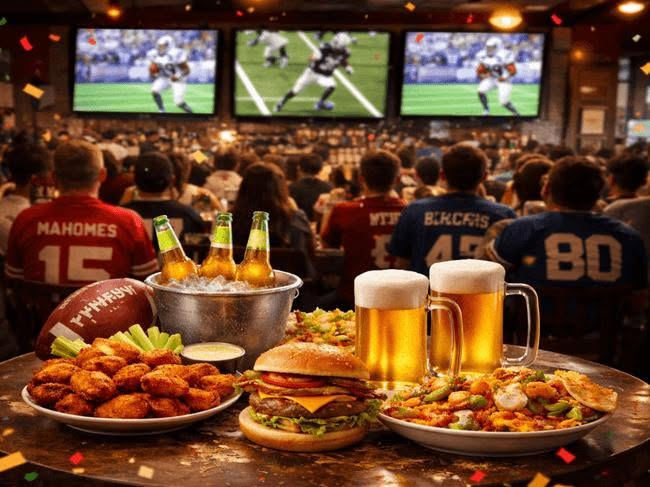
When football season arrives, millions of Americans do more than choose a team and turn on the television. They decide what they are going to eat, where they are going to watch the game, who they are inviting over and, increasingly, whether they would rather let a restaurant or caterer handle the food altogether. For the food and hospitality industry, the NFL season is not simply a sports season. It is a months-long series of recurring dining occasions that can turn an ordinary Sunday, Monday or Thursday into a revenue opportunity.
The numbers help explain why restaurants should pay attention. For Super Bowl LX in February 2026, the National Retail Federation estimated that a record 213.1 million U.S. adults planned to watch the game. More than 121 million expected to host or attend a party, while another 18.2 million planned to watch at a bar or restaurant. Total spending surrounding the game was expected to reach a record $20.2 billion, or $94.77 per person.
Even more important to the food industry is where much of that money goes. Research from Northwestern University's Medill Spiegel Research Center found that 81.2% of planned Super Bowl party spending was directed toward food and beverages. That makes football much more than an entertainment event for restaurants. It creates an occasion to eat.
And the Super Bowl is only the finale. The larger opportunity stretches across the regular season, playoffs and championship game. Every NFL week provides restaurants with another chance to sell wings, pizza, burgers, barbecue, seafood, appetizers, drinks, desserts, party trays and catering packages. Add college football on Saturdays, and a restaurant with the right strategy can potentially build an entire weekend around football.
The restaurant industry can see the financial impact when football reaches its biggest moments. Square's analysis surrounding the 2026 championship game found that food and beverage spending in San Francisco increased 26.3% week over week, while bar spending more than doubled, rising 102.3%. Pizzeria spending increased 68.6% from the previous week. In nearby San Jose, food and beverage spending jumped 54.5% week over week, bar spending increased 64.8%, and pizzeria spending climbed 83.3%.
Those numbers should tell restaurant owners something important: football fans are not only buying meals. They are buying an experience built around eating while watching the game.
That is something major sports-bar brands have understood for years. Buffalo Wild Wings doesn't simply sell chicken wings; it explicitly markets itself as a place to watch football, noting that its sports bars average 62 televisions and show both professional and college football. The chain also uses bundles, promotions and shareable meals to connect food purchases directly with game-day viewing. Other recognizable sports-bar concepts have similarly built their appeal around the combination of televisions, food, drinks and a communal viewing atmosphere.
Consumer transaction data makes the connection even clearer. Consumer Edge found that during the 2025 Super Bowl, Pizza Hut, Papa Johns and Domino's each increased their share of restaurant spending by more than 50% compared with ordinary Sundays leading up to the game. Wing-focused concepts Wingstop and Buffalo Wild Wings also experienced sharply higher shares of restaurant spending. Interestingly, traditional chicken chains did not receive the same boost, suggesting that football consumers were specifically seeking shareable, watch-party-friendly foods such as wings, pizza, bundles and platters rather than simply purchasing any available restaurant meal.
That distinction should influence how independent restaurants approach the 2026–2027 football season. A restaurant does not need to become a sports bar to profit from football. It needs to create products and experiences that fit the way people consume football.
A Caribbean restaurant could develop a game-day jerk chicken and wings package. A barbecue restaurant could offer a family-size ribs, brisket and sides package. A seafood restaurant could create a football seafood boil. A soul-food restaurant could offer wings, mac and cheese, greens, sliders and desserts as a watch-party package. Mexican restaurants can build taco and nacho bars. Italian restaurants can develop pizza, pasta and appetizer bundles. The cuisine can remain authentic to the restaurant. What changes is the packaging, portion size and marketing occasion.
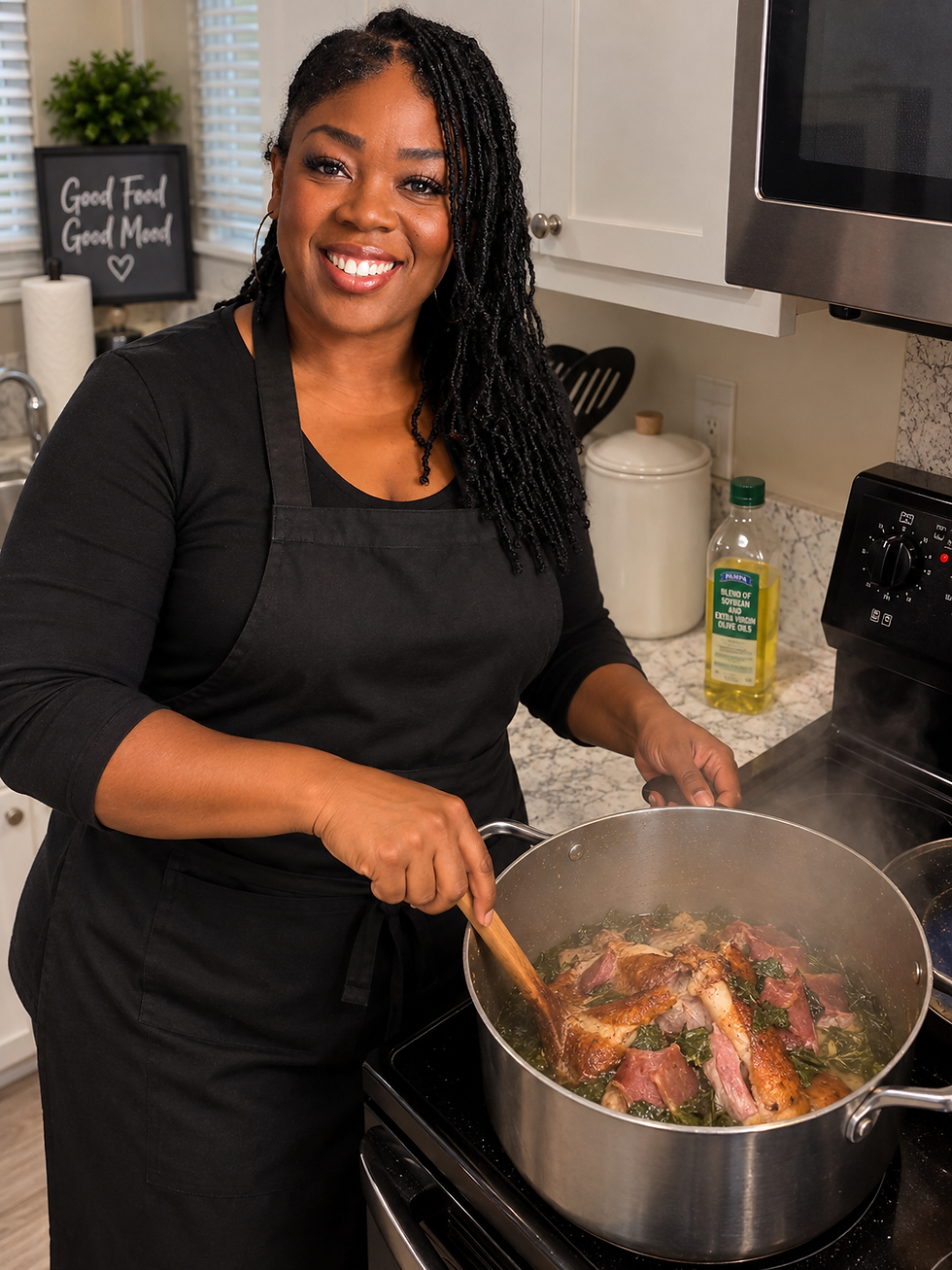
That creates an interesting opportunity for independent hospitality companies such as Blessed Hands Decor and Catering in Norwalk, Connecticut. The company already combines Haitian and Caribbean food, catering, event planning and décor services, giving it an opportunity to approach football season differently from a restaurant that only sells food. Instead of simply catering a football party, Blessed Hands is gearing up to offer clients in Norwalk and surrounding areas the ability to create the entire football-party atmosphere, including catering and football-themed décor.
Imagine walking into someone's home or rented event space and seeing team-colored balloon arrangements, football-themed tables, coordinated serving stations and a professionally presented food spread waiting for guests before kickoff. That turns a catering order into an event package.
For caterers, that is where football season becomes particularly interesting. A customer who might spend $150 or $200 picking up food could potentially become a much larger client when the purchase includes delivery, setup, décor, serving pieces, desserts, beverages and cleanup. Instead of asking, “How much food would you like?” catering companies can ask, “What kind of game-day experience would you like us to create?”
The same principle applies inside restaurants and sports bars.
Simply hanging a few team banners and turning on the television's leaves money on the table. Restaurants should think about the customer journey from the moment someone decides where to watch the game. Can customers reserve a table? Is there a four-person game-day package? What about an eight-person package? Is there a halftime special? Are there team-themed dishes or cocktails? Can customers pre order food for home? Can a business or organization reserve an area for its employees? Can the restaurant capture the customer's phone number or email address so it can invite them back next Sunday?
Football's greatest advantage to the restaurant industry is repetition. The customer who watches one game may have another reason to return seven days later.
That means restaurant operators should resist the temptation to make every football promotion about discounts. The objective should be increasing total customer value. A discounted wing special may attract someone once. A compelling watch-party atmosphere can create a weekly customer.
Restaurants should also look beyond their hometown team. In markets with residents from around the country, there may be Cowboys fans, Eagles fans, Steelers fans, Giants fans, Packers fans and Chiefs fans living within miles of one another. A restaurant could designate particular areas for different fan groups, partner with local alumni organizations or supporter clubs, or advertise specific games through social media and geofencing.
Fantasy football offers another opportunity before and during the season. Restaurants can host draft parties with reserved tables, food packages and drink specials. Corporate groups can hold employee fantasy drafts. Private rooms can become draft headquarters. Once those customers are inside the restaurant, the business has an opportunity to convert them into regular game-day customers.
Takeout and delivery should receive just as much attention as dine-in business. Some fans want the noise and excitement of a packed sports bar. Others want their own television, couch and friends. Restaurants should sell to both.
A strong football strategy therefore has two doors: “Watch it here” and “Take game day home.”
The second door is becoming increasingly valuable. Even as consumers have become more cautious in other areas of spending, food-delivery platforms have continued reporting strong demand in 2026, showing that consumers continue to place a premium on convenience. For restaurants, that means game-day ordering should be simple, highly visible online and designed around groups rather than individual entrées.
Restaurants should also plan for volume instead of being surprised by it. A successful promotion that overwhelms the kitchen can do more harm than good. Game-day menus should favor items the kitchen can execute quickly and consistently. Packages should have clear pickup windows. High-volume items should be prepared appropriately. Staffing should reflect kickoff times. Delivery customers should have a separate pickup process when possible. Sports bars should schedule additional bartenders and servers around marquee games.
The most profitable football promotion is not necessarily the one that produces the biggest crowd. It is the one that produces a crowd the operation can serve efficiently and persuade to return.
The 2026–2027 season also gives restaurants a reason to think more creatively about partnerships. Caterers can work with event planners. Restaurants can partner with apartment communities for resident watch parties. Sports bars can work with local businesses on sponsored game nights. Food businesses can collaborate with beverage companies, DJs, alumni groups and community organizations. Hotels can refer visiting fans to nearby restaurants. Restaurants without enough televisions can still sell catering packages to venues that do.
And businesses such as Blessed Hands demonstrate another possibility: food and décor can be sold together. A restaurant or catering company that can transform a customer's living room, event venue or corporate space into a football environment has moved beyond selling trays of food. It is selling convenience, presentation and celebration.
That may be the most valuable lesson for the food industry this football season.
Do not simply advertise, “We have the game on.”
Tell customers what they can experience while watching it.
Show the wings coming out of the kitchen. Show the seafood platter. Show friends cheering around a table. Show the bartender preparing drinks. Show the football décor. Show the catering package arriving at someone's house. Show the private room filled with fans. Show the family that doesn't have to cook or clean.
Football gives restaurants something marketers spend enormous amounts of money trying to manufacture: a recurring reason for customers to gather.
From September through the playoffs and into the Super Bowl, restaurants, sports bars and caterers have months of built-in occasions to turn games into reservations, takeout orders, catering contracts, private parties and repeat customers.
Football will already bring people together.
For the food industry, the opportunity is making sure your food is on the table when it happens.

Comments